Posts

original published: 2019-02-12 for an update see https://thomasgoelles.com/post/math2/
Introduction
There are many blog posts comparing R and Python for data science but there are only a few about Wolfram vs. Python. In this post I will show some differences between Wolfram and Python and presume that you are familiar with Python but not with Wolfram. Python is now the most popular language for data science projects, while the Wolfram Language is rather a niche language in this concern.
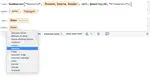
While developing in the Wolfram language (Mathematica) has many advantages, I found debugging hard and confusing at times. The Wolfram language is much more flexible compared to other languages because it treats everything as Symbols and therefore a function can take everything as an argument. Really everything, a sound, an image, a graph, a Number, a String, a Webpage …. Therefore it is important to restrict the function to specific arguments, like Integers with patterns.